Flagship casePublic websiteAgent PortalMobile web application

The Phonebooth

A connected experience across customers, operators, and mobile interactions.

A connected platform story spanning public discovery, operator workflows, and the mobile interactions required to operate the service.

01 · The opportunity

The business needed more than a marketing site.

The Phonebooth required a coherent experience for several distinct participants: people discovering the service, operators responsible for locations and customer activity, and mobile users completing time-sensitive steps at charging stations.

The complete origin story and operating constraints are being finalized with the team that built and runs the systems. The structure shown here intentionally avoids inventing details before that review.
02 · Public experience

Explain an unfamiliar service quickly and credibly.

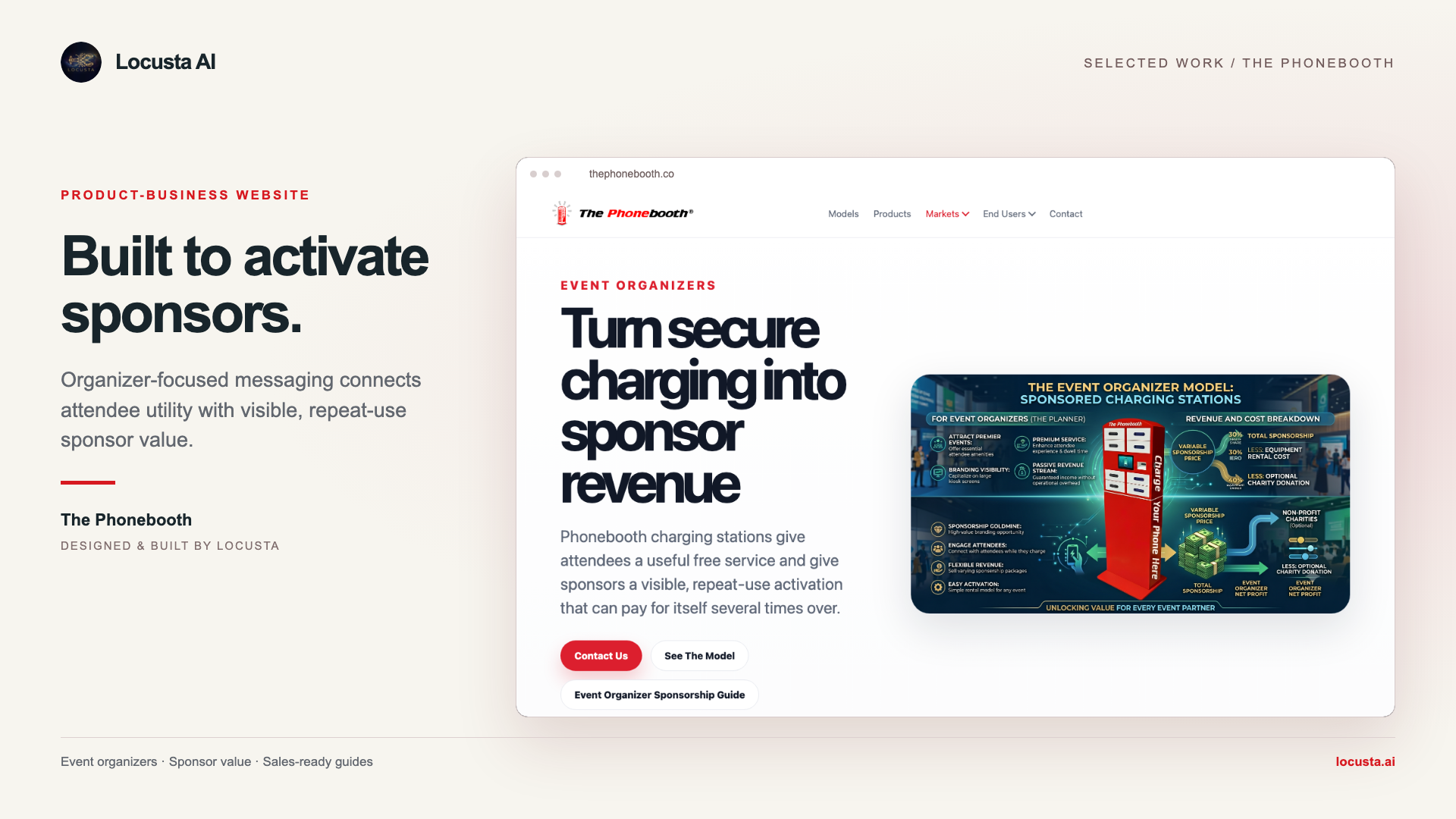
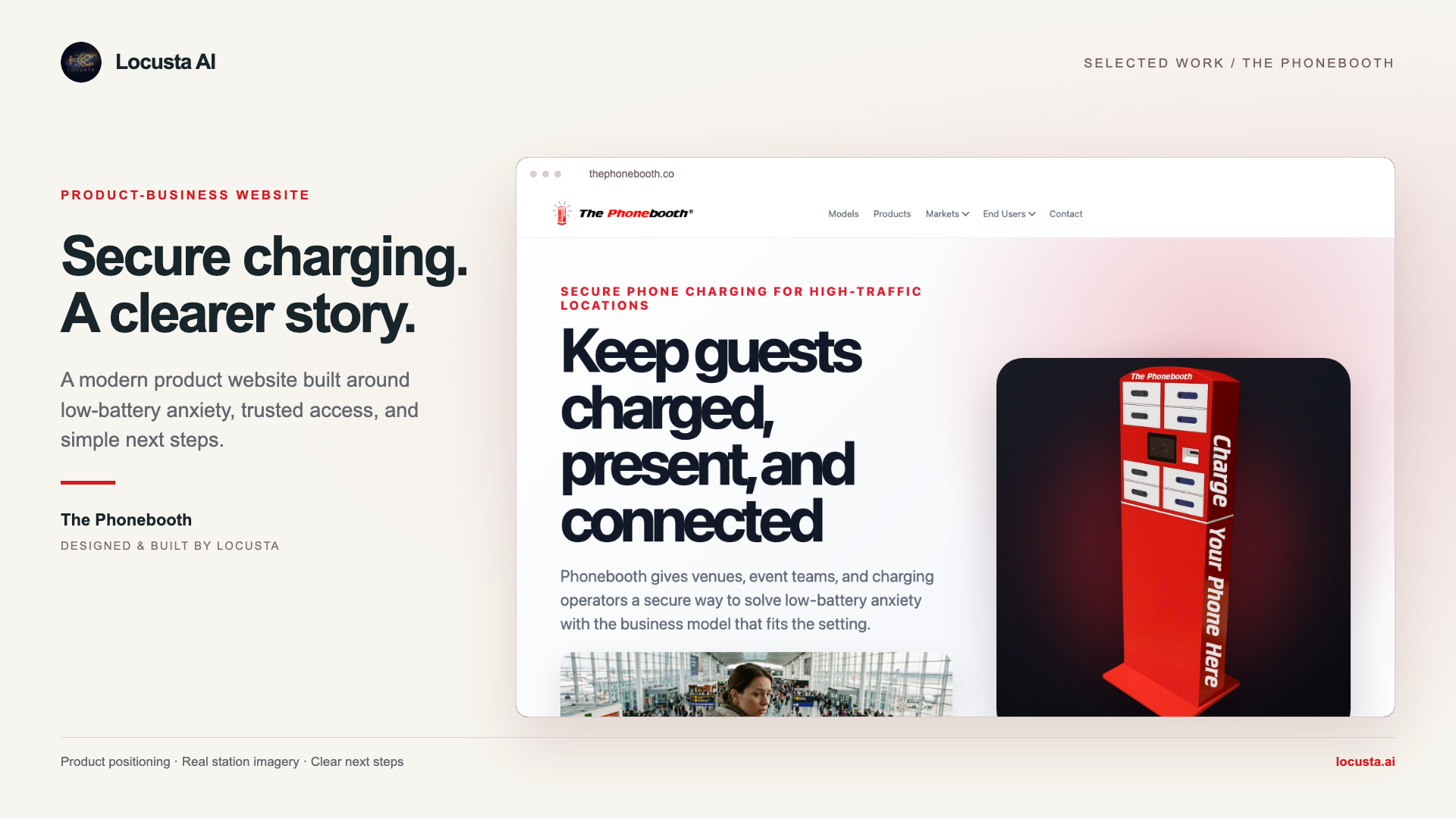
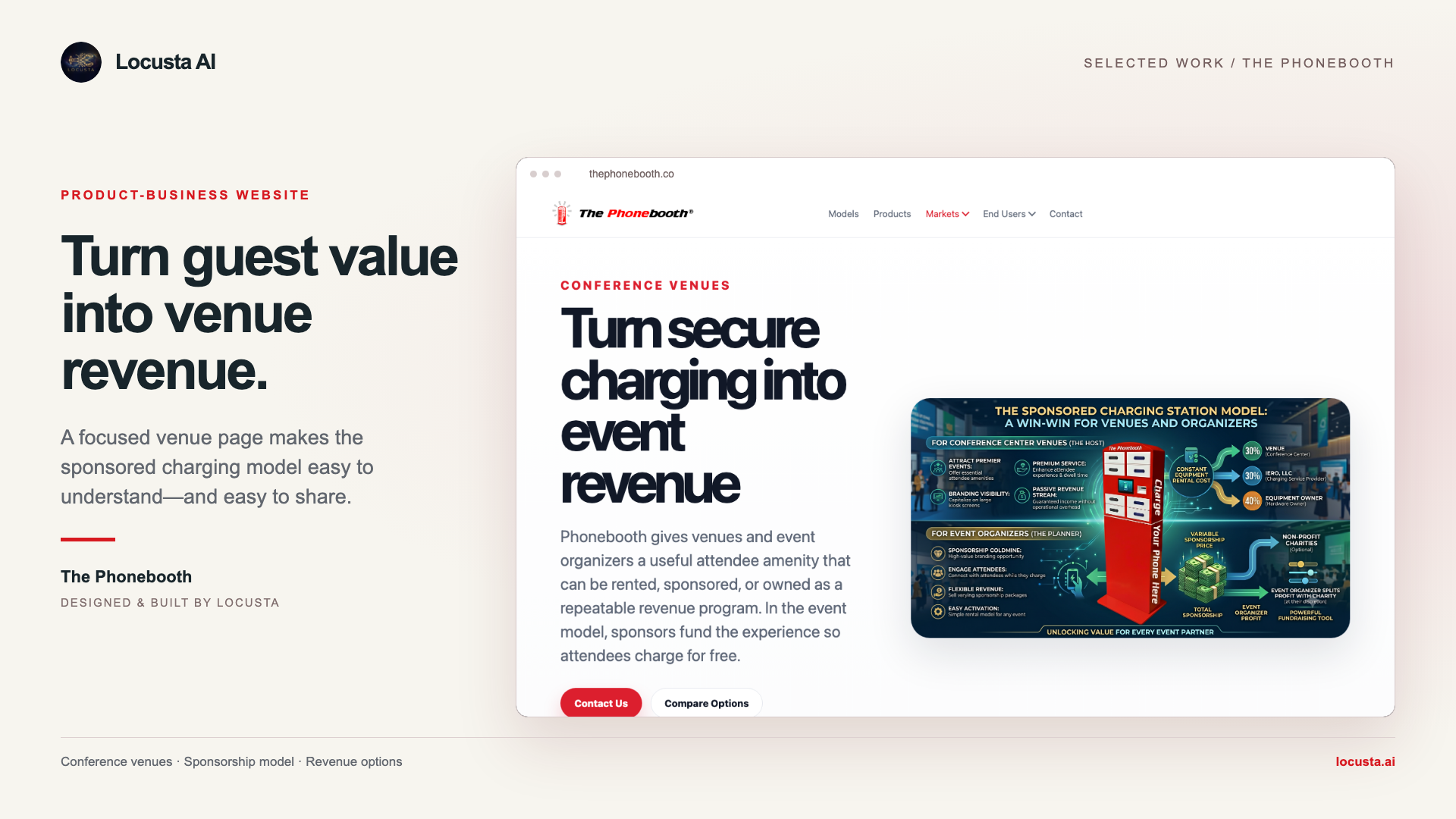
The public site had to explain the service to several audiences—including charging station operators, conference venues, conference organizers, and end users—each arriving with different questions and goals. Persona-specific messaging and clear navigation help each visitor quickly find the information and action relevant to them, while connecting naturally to the applications behind the service.

See how the public experience introduces secure phone charging, then gives venues, event organizers, operators, and end users a clear path into the service.

03 · Agent Portal

Give operators the context and controls their role requires.

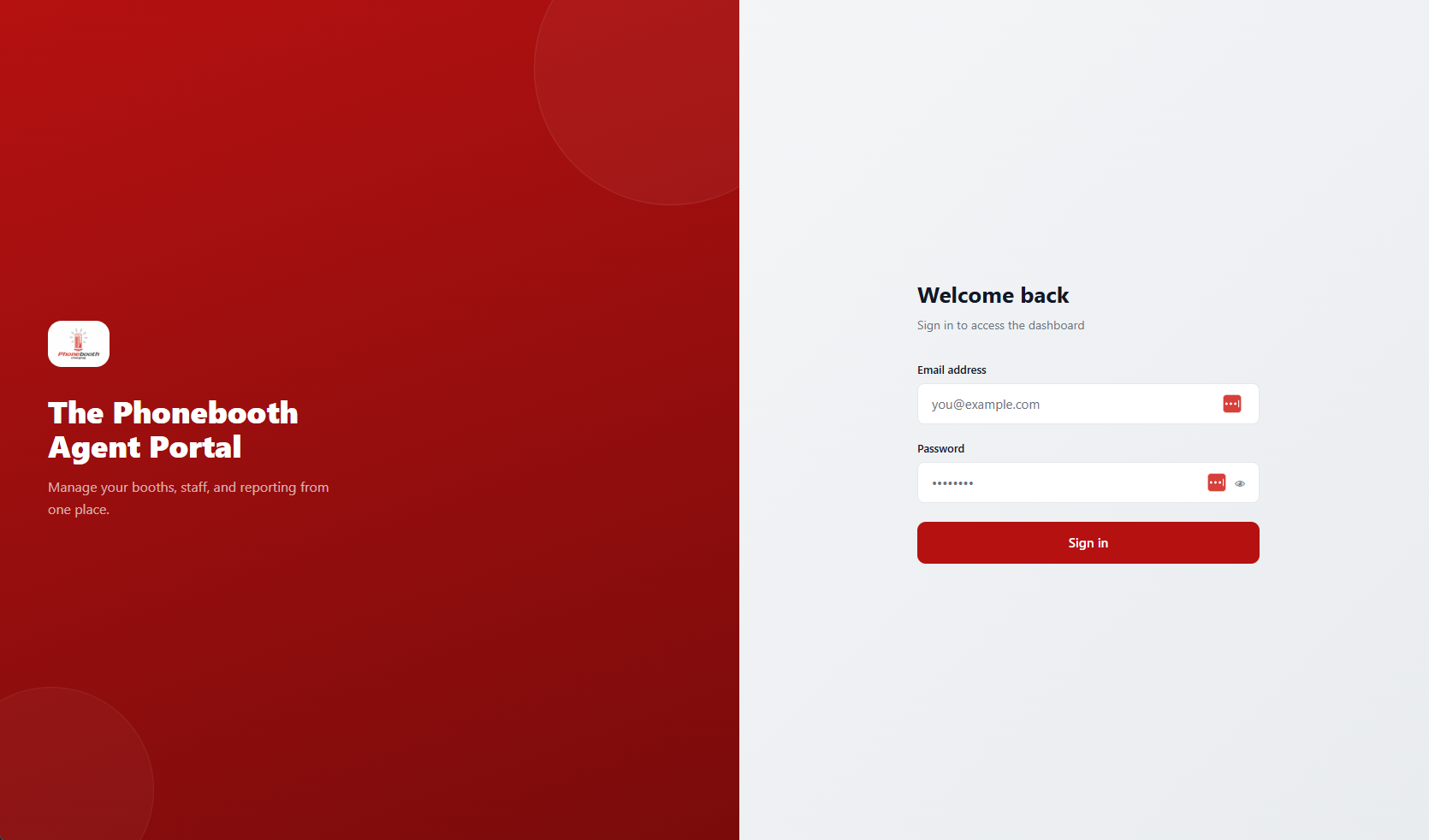
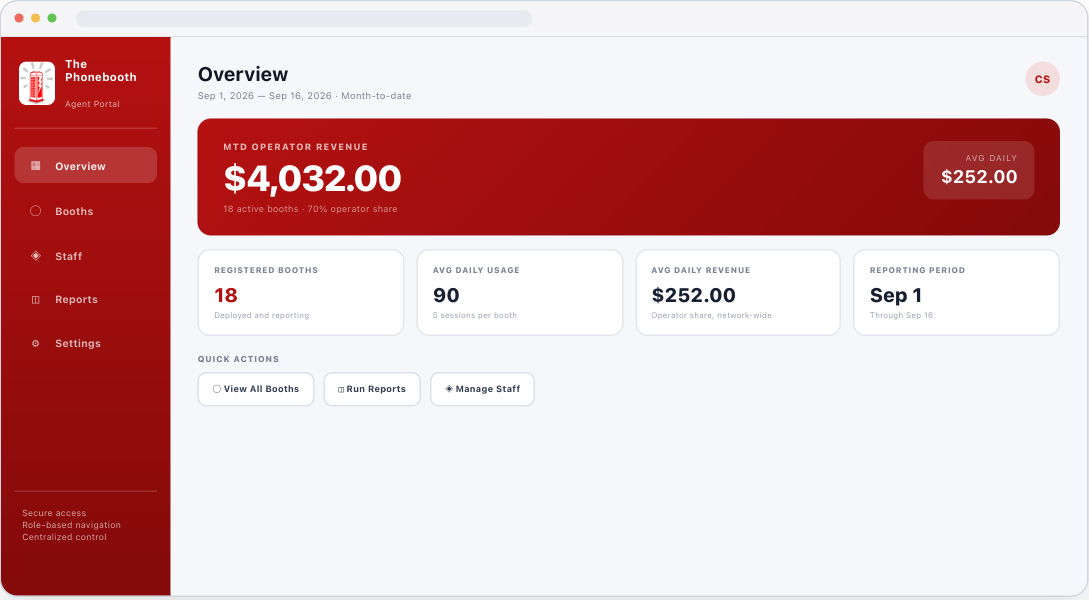
The Agent Portal is a secure command center for Charging Station Operators—not an administrative afterthought. It replaces spreadsheets and disconnected updates with one operating view across locations, booths, staff, usage, revenue, and reporting.

  • Monitor network performance and active booths at a glance
  • Maintain locations, station details, status, pricing, and placement
  • Manage authorized installation and service personnel through role-based access
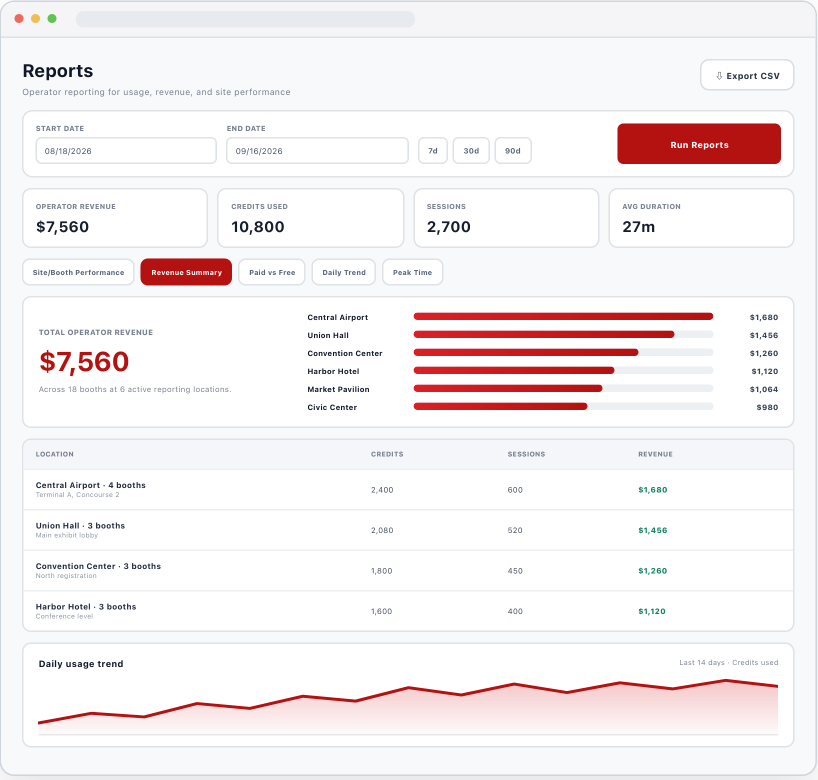
  • Compare locations, identify demand patterns, and surface booths needing attention
  • Review operator economics and export detail for accounting and stakeholders

A connected operating view helps charging station operators monitor booth activity, understand revenue, manage teams, and make better placement decisions.

All financial and performance figures shown are illustrative demo data. They do not represent actual customer results or guarantee future performance.

04 · Mobile web application

Design the mobile journey around the moment of use.

The Phonebooth replaced legacy native applications with a browser-based mobile experience shared by iOS and Android users. The interface connects to AWS Lambda data services, can be maintained and updated without separate platform releases, and guides users through time-sensitive charging-station tasks without requiring training.

  • Consistent iOS and Android experience
  • Simple, training-free interaction
  • Centralized maintenance and updates
  • Integration with AWS Lambda data services
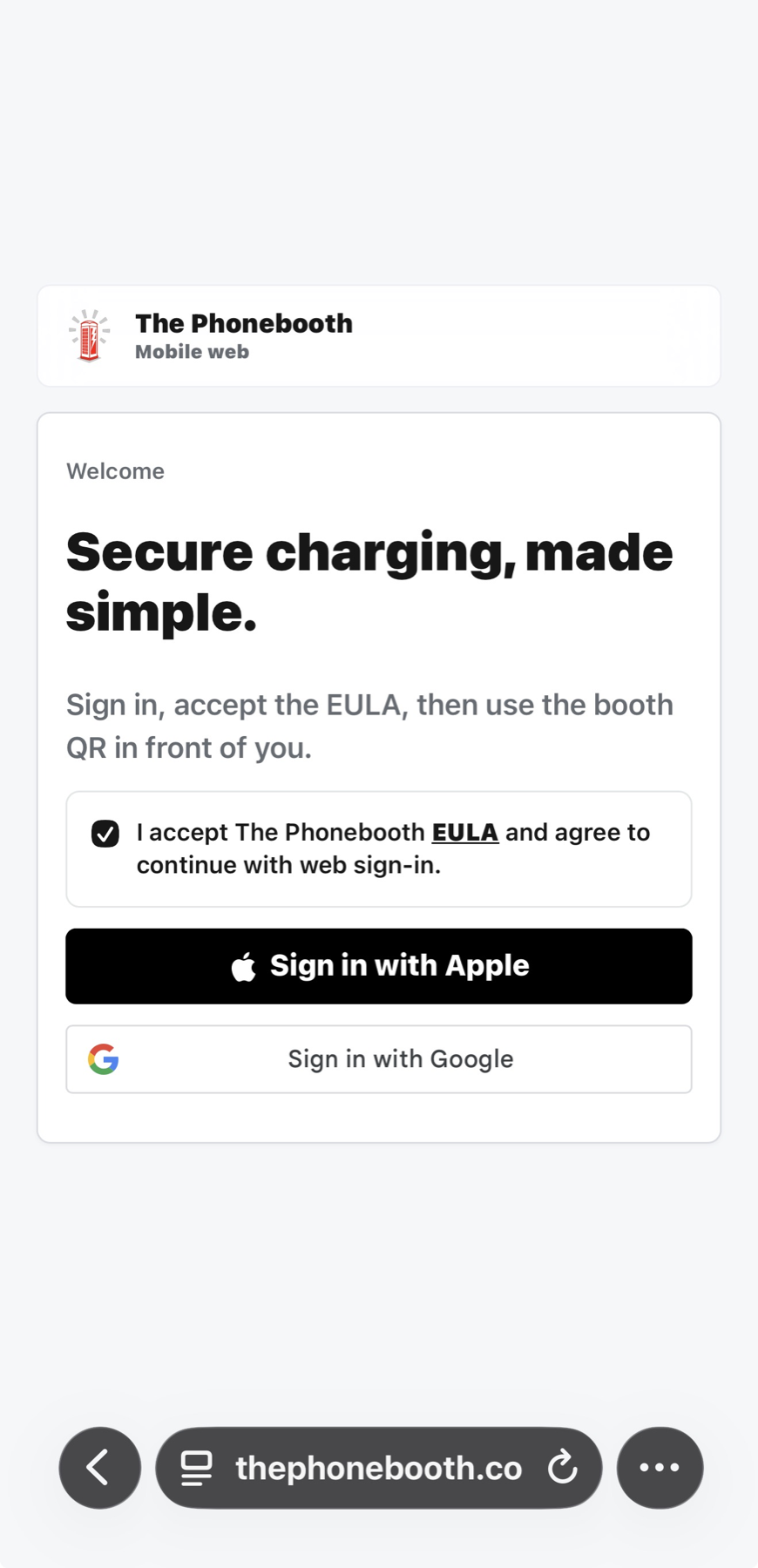
The Phonebooth mobile web sign-in screen
Sign in and accept the service terms from any supported mobile browser.
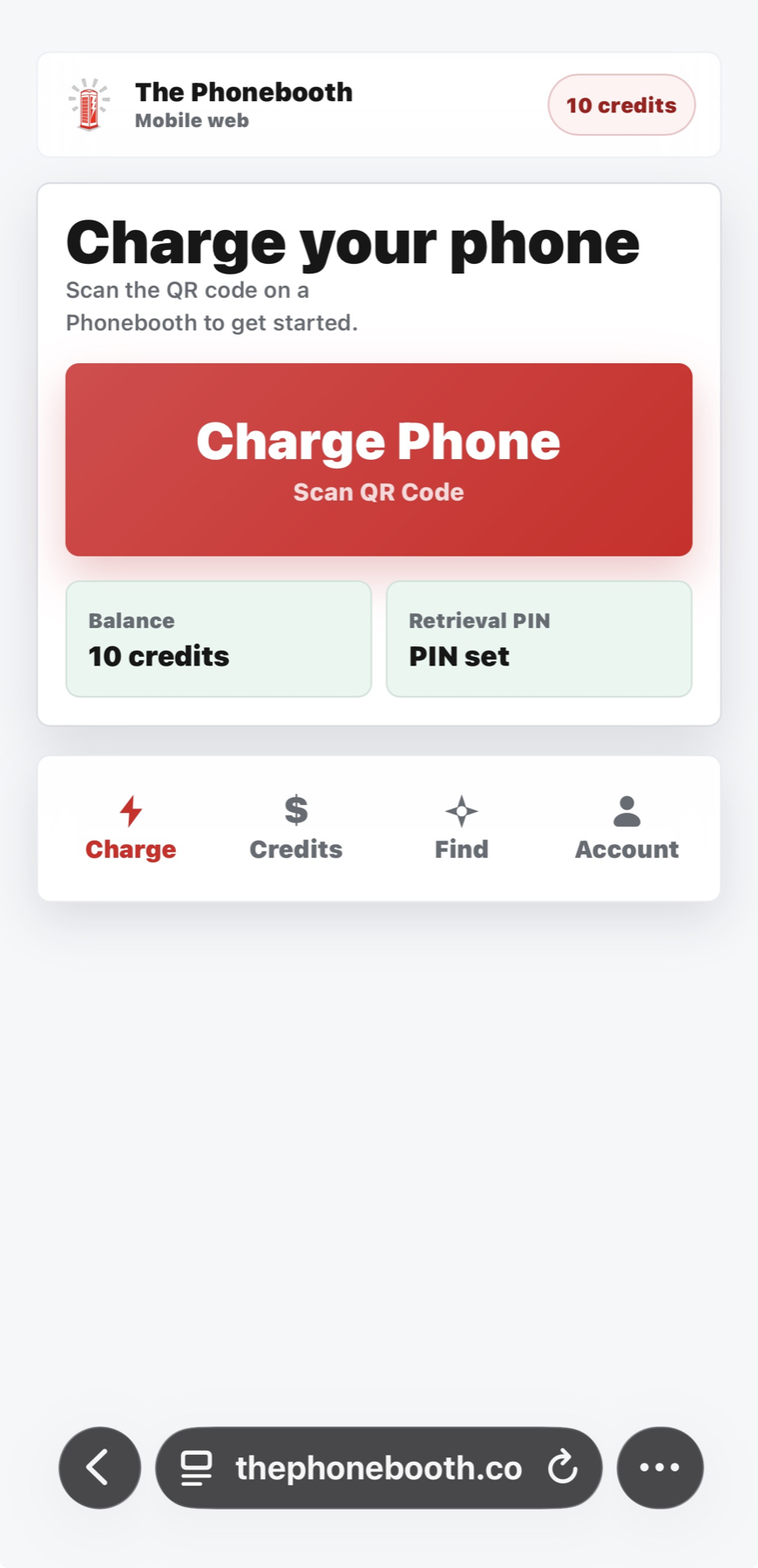
The Phonebooth mobile charging dashboard
Start a charging session from a clear, task-focused dashboard.
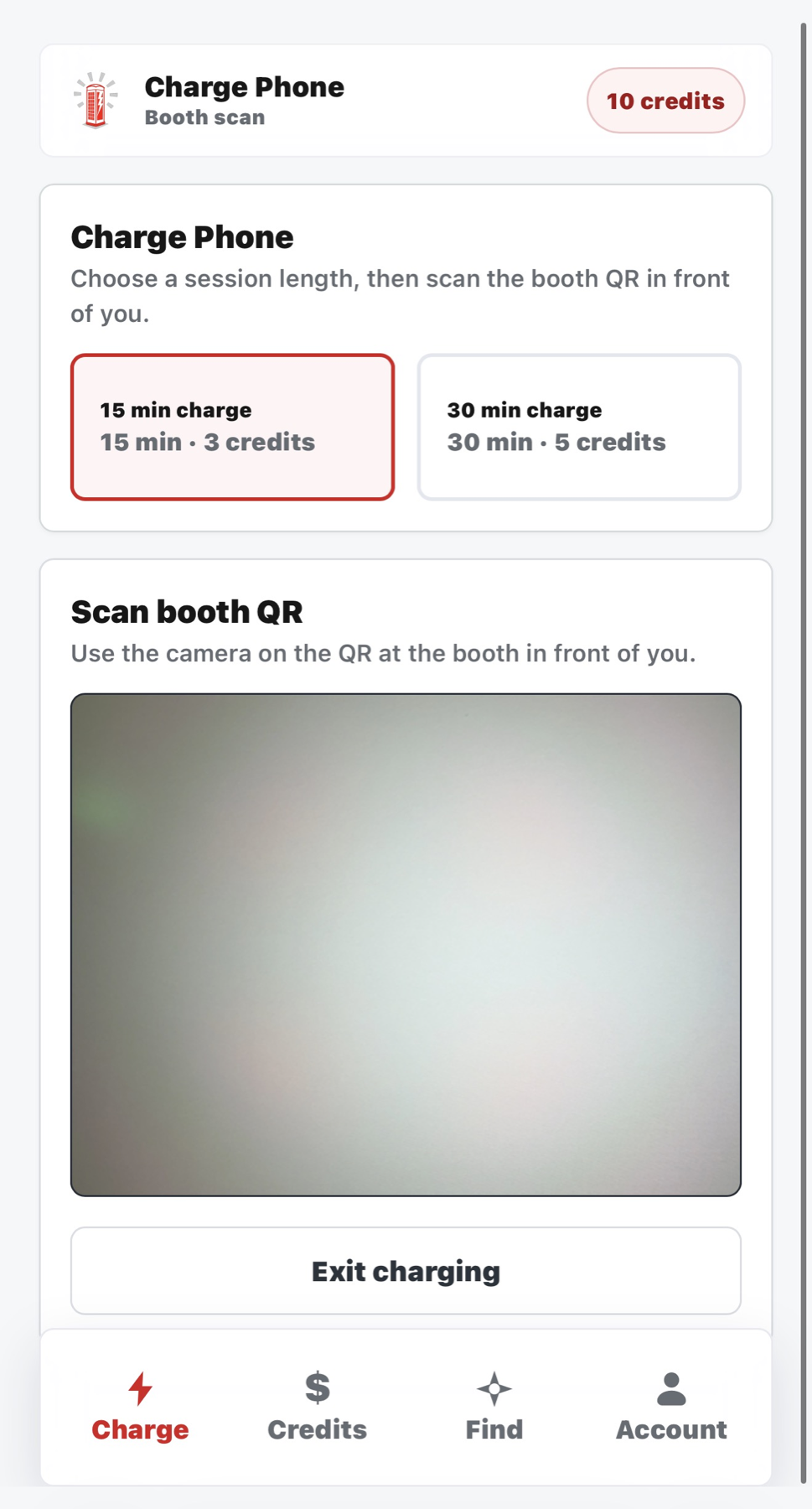
The Phonebooth booth QR scanning screen
Select a session length and scan the booth QR code to begin.
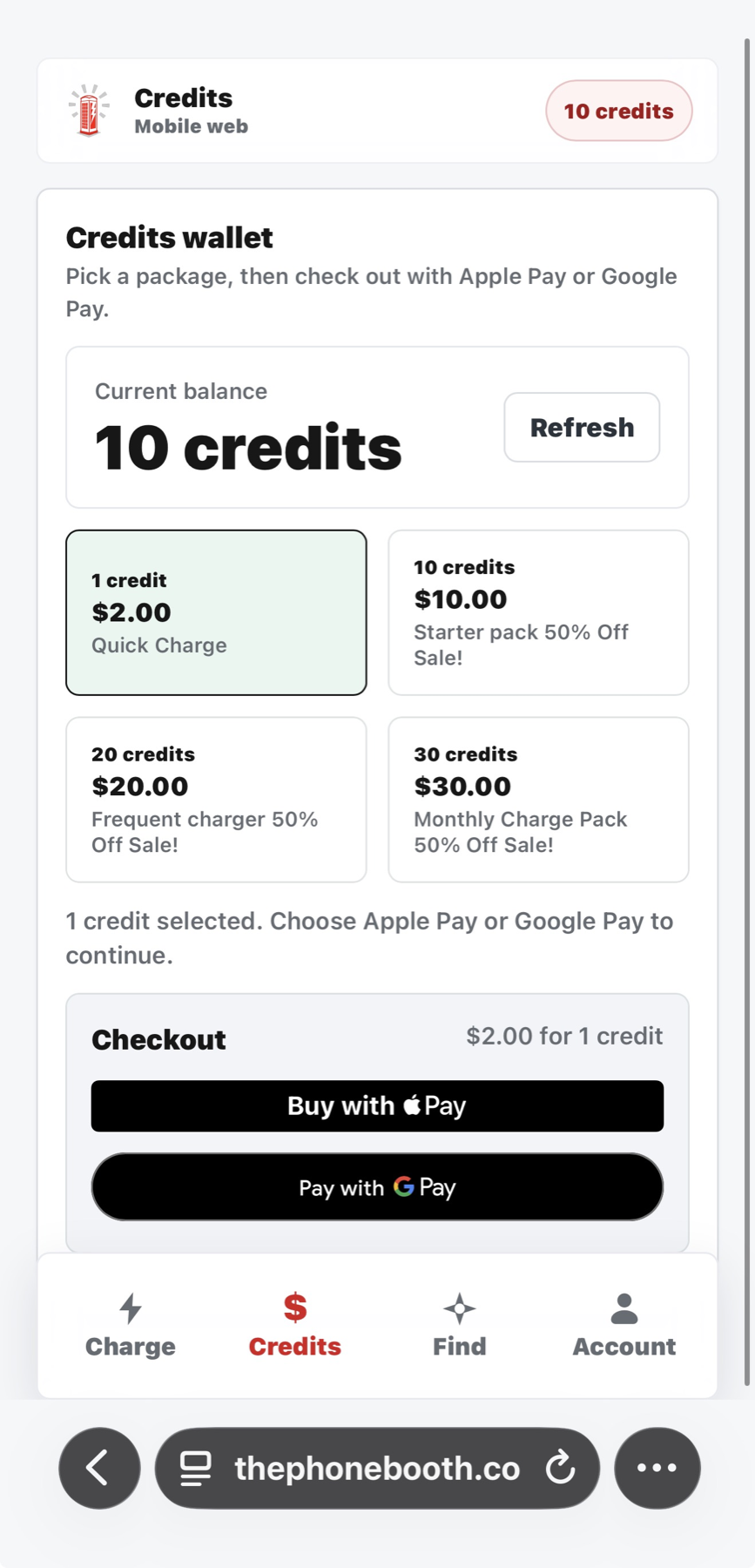
The Phonebooth mobile credits wallet and checkout
Choose credits and check out using familiar mobile payment options.

05 · Integrated result

Distinct interfaces, a coherent business system.

The value of the work is not the number of screens produced. It is the way the public experience, operator tools, and the mobile web application share a coherent model of the service while respecting the distinct needs of each participant.

06 · Built together

Operational knowledge guided the design.

The Phonebooth team worked directly with persistent digital coworkers to turn evolving business requirements into multiple connected systems.

The developer collaborated with the agent team through a familiar messaging interface without installing software or managing models, configurations, sessions, or agent communication protocols. Locusta operated that underlying infrastructure externally, allowing the developer to concentrate on requirements, decisions, and working software.

The developer found the experience technically capable without requiring administration of the agent environment—and saw particular value for non-technical collaborators. The same conversational workflow can make agentic product delivery accessible without exposing the complexity behind it.

Need several experiences to behave like one system?

Start a conversation →